Denisovans survived in Tibet by eating everything
Bones from a cave at 3,280 meters reveal their diet over tens of thousands of years.
A rib and thousands of animal bones show that Denisovans, extinct relatives of humans, lived on the roof of the world for a long time.
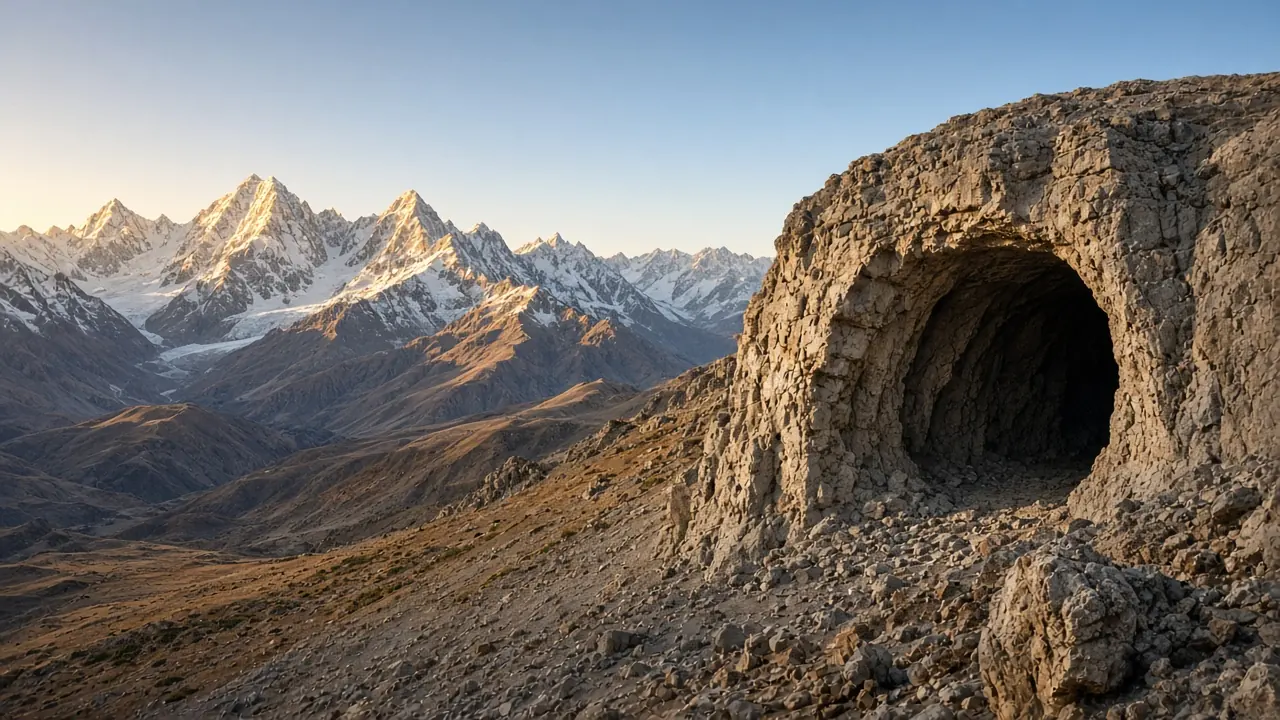
Denisovans are an extinct human group known from very few fossils. A study published in Nature in 2024 analyzed remains from Baishiya Karst Cave, on the Tibetan Plateau, 3,280 meters above sea level.
The team examined more than 2,500 bones and identified a new Denisovan rib, called Xiahe 2, between 48,000 and 32,000 years old. The animal bones, bearing cut marks, reveal what they ate: mostly blue sheep, but also woolly rhinos, yaks, marmots, birds and even hyenas.
The finding shows that Denisovans exploited a wide variety of animals and adapted to a high-altitude environment for tens of thousands of years, into times when modern humans were already spreading through the region.
The Xiahe 2 rib is a 51.5-millimeter fragment. Since its shape was not enough to identify it, researchers used ZooMS, a technique that recognizes species from collagen proteins in bone. Ancient protein analysis then recovered 4,597 amino acid positions across 21 proteins and placed it with the Denisovans, closest to the individual known as Denisova 3. Until now very few remains of this group were known, mostly from Denisova Cave in Siberia and from the Tibetan Plateau itself.
Key facts
- Baishiya Cave, at 3,280 meters altitude.
- Xiahe 2 rib: 48,000 to 32,000 years old.
- More than 2,500 bones analyzed.
- Diet: blue sheep, woolly rhino, yak, marmot, birds and hyenas.
- Identified with ZooMS and analysis of 21 ancient proteins.
New finds in the region could clarify when and why the Denisovans disappeared.
Futurismo newsletter
Get the most futuristic stories in your inbox. Free.
By subscribing you agree to receive emails from Futurismo and our privacy policy. Unsubscribe anytime.Related stories
Homo erectus fossils recovered from the seafloor in Indonesia
Remains dredged from the Madura Strait reveal a land now underwater.
An AI reveals which dinosaur left each footprint
DinoTracker compares fossil footprint outlines and gets it right like an expert.
Shri rapax, the small dinosaur with robust thumbs
A new dromaeosaurid from Mongolia had especially strong hands.

The world's oldest cave painting: a hand from 67,800 years ago
A hand stencil in an Indonesian cave beats every record for human art.