Europa's oceans could host long-lived hydrothermal vents
A model shows seafloor heat could last billions of years.
Beneath the ice of moons like Europa there could be hot water vents active for an extremely long time, a key ingredient for life.
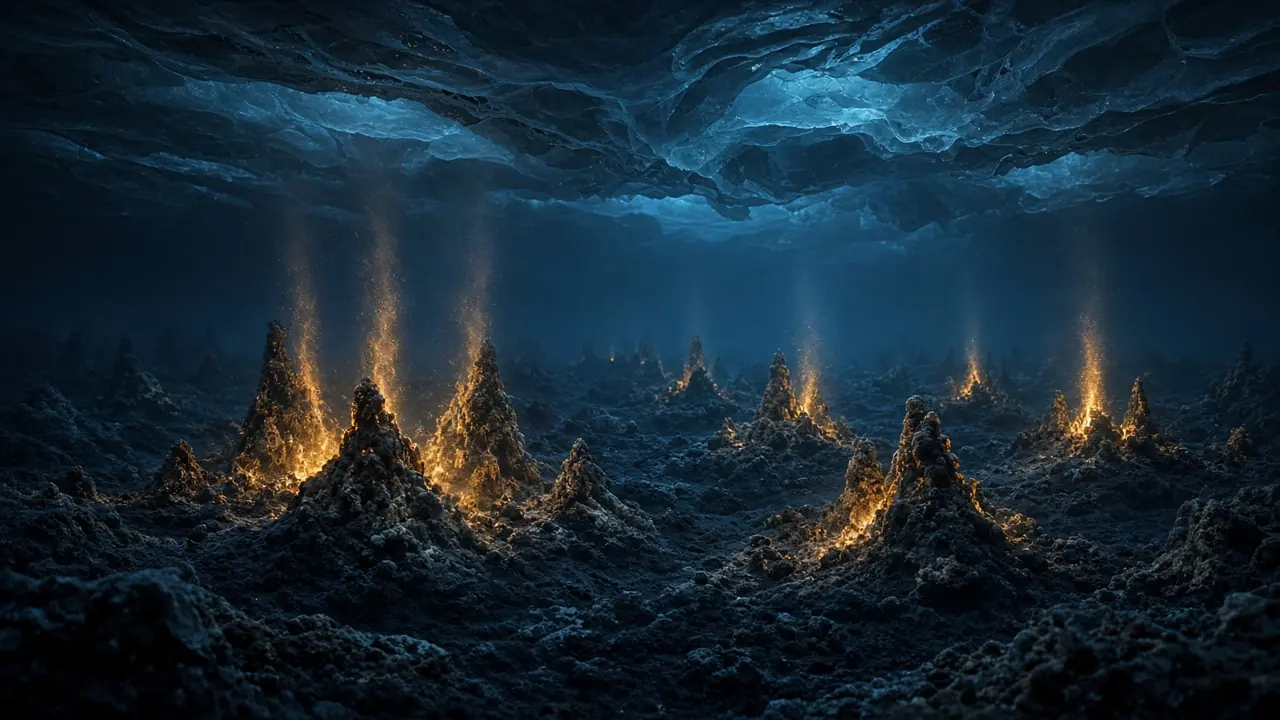
A study led by Andrew Fisher, of the University of California, Santa Cruz, published on June 24, 2024 in JGR Planets, modeled how water would circulate through the rocky floor of the hidden oceans of icy moons such as Jupiter's Europa or Saturn's Enceladus.
The team based it on a real system on Earth: the flank of the Juan de Fuca Ridge, in the Pacific, where water enters and leaves the seafloor driven by a "hydrothermal siphon" without the need for active volcanoes. The simulations indicate something similar could happen on those moons, powered by internal and tidal heat.
According to the model, these low-temperature vents could persist for millions to billions of years. That matters because hot water circulating through rock supplies chemical energy and nutrients, conditions that sustain ecosystems on Earth. It is not proof of life, but of possible stable habitable environments.
In the model, ocean water enters the rocky floor through one seamount, travels about 48 kilometers through the rock and exits warmer through another. The low gravity of these moons weakens buoyancy and reduces flow, but precisely because of that the system can last longer. The simulations produced outflow temperatures of up to about 150 °C.
Key facts
- Published in JGR Planets on June 24, 2024.
- Earth analog: the Juan de Fuca Ridge, in the Pacific.
- The vents could last millions to billions of years.
- Applies to moons with hidden oceans such as Europa and Enceladus.
Missions such as NASA's Europa Clipper will look for more clues about Europa's habitability.
Futurismo newsletter
Get the most futuristic stories in your inbox. Free.
By subscribing you agree to receive emails from Futurismo and our privacy policy. Unsubscribe anytime.Related stories
The battery that stores energy with CO2 instead of lithium
An Italian company stores solar electricity by compressing carbon dioxide.
A theorem strengthens the case that the universe had a beginning
Raphael Bousso extends a singularity theorem into the quantum realm.

Scientists create a supersolid of light and matter at room temperature
A quantum state that flows like a liquid and orders itself like a crystal, with no need for extreme cold.
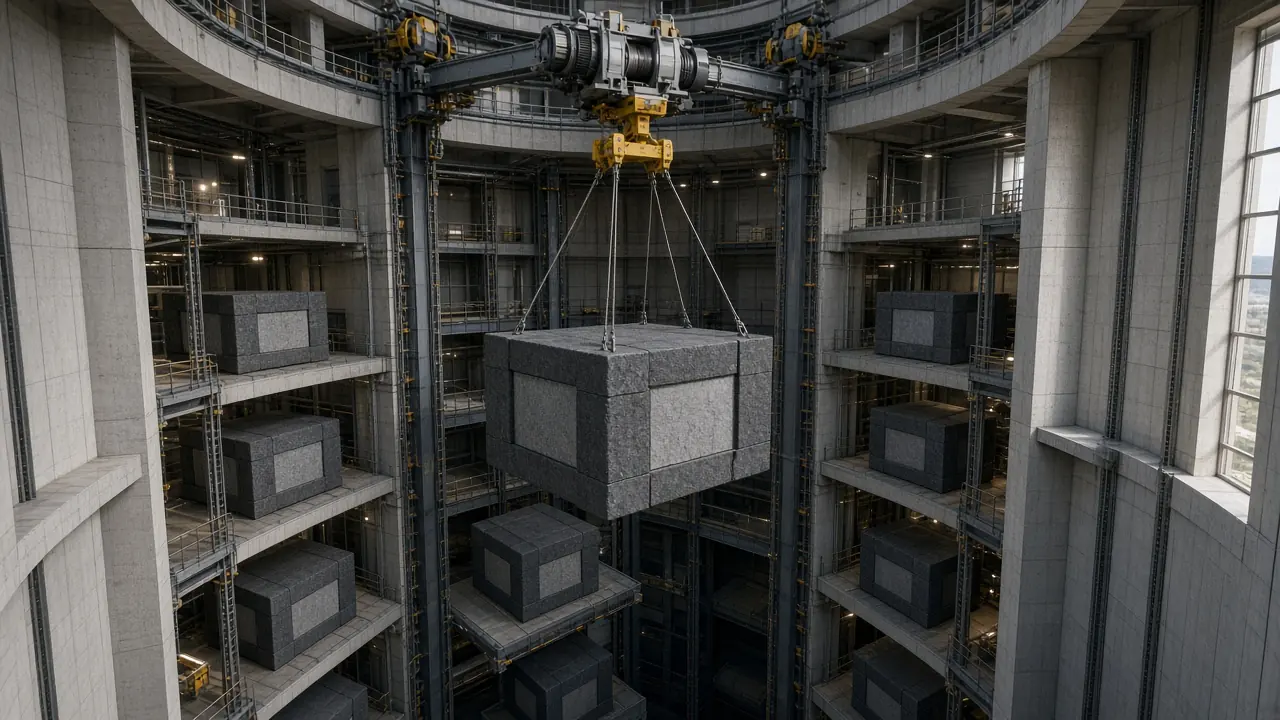
Skyscrapers that work as gravity batteries
Energy Vault and SOM propose storing energy by raising and lowering weights inside towers.