A theorem strengthens the case that the universe had a beginning
Raphael Bousso extends a singularity theorem into the quantum realm.
Did the universe have a beginning? A Berkeley physicist extended a classic result that points to yes, even accounting for quantum effects.
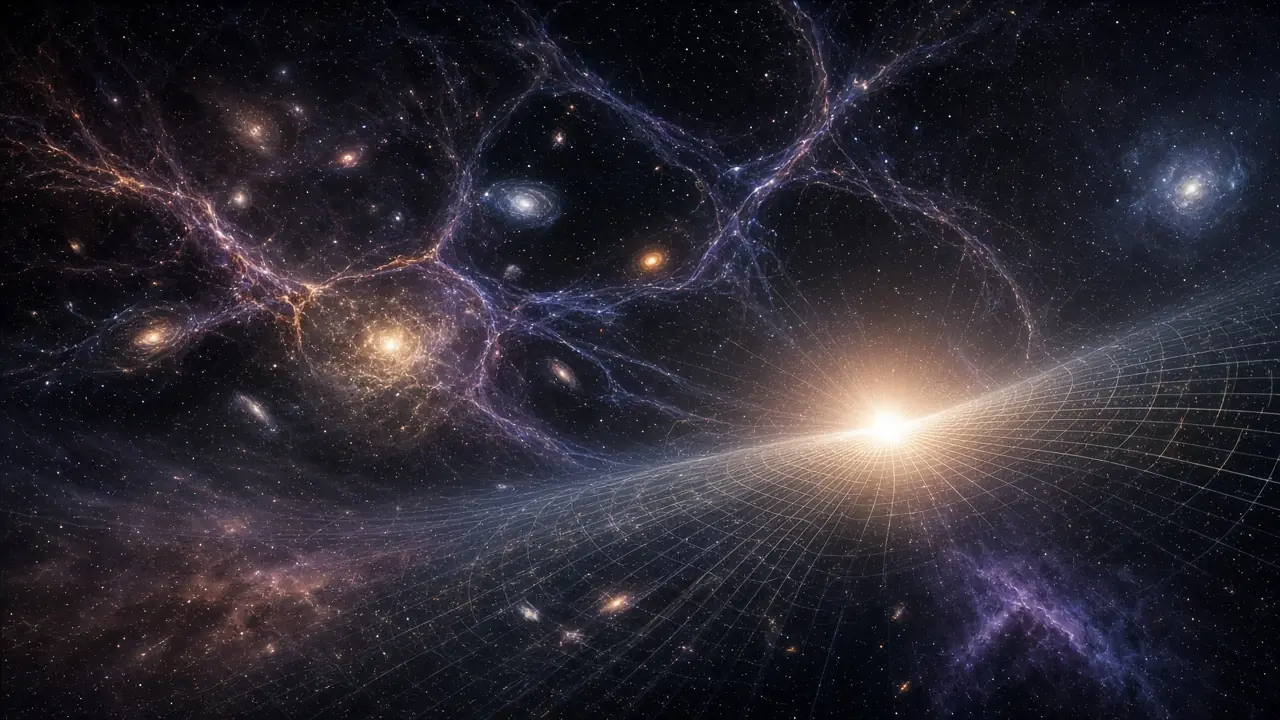
Raphael Bousso, a theoretical physicist at the University of California, Berkeley, published a paper in Physical Review Letters extending a singularity theorem associated with Roger Penrose and Aron Wall.
Singularity theorems show that, under certain conditions, spacetime must have an edge, a point where known physics stops working, such as the Big Bang or the interior of a black hole. The problem is that they were based on classical relativity. Bousso shows that a version of the result holds when quantum effects are included.
This strengthens the idea that the universe had a beginning in the past. However, it does not rule out all alternative models, such as some cyclic universes, and it does not explain what happened at that beginning: that would require a complete theory of quantum gravity.
The paper is titled "Robust Singularity Theorem." Instead of the classical energy condition, Bousso starts from the generalized second law: generalized entropy, which adds the area of horizons and the entropy of matter, does not decrease. So the proof holds even when quantum corrections are not small. According to the author, the result rules out controlled "bounces" inside black holes and in many cosmological models.
Key facts
- Author: Raphael Bousso, University of California, Berkeley.
- Extends the singularity theorem of Penrose and Wall.
- Published in Physical Review Letters (preprint arXiv 2501.17910).
- It does not rule out all cyclic models.
The question of what existed at the beginning will remain open until there is a theory of quantum gravity.
Futurismo newsletter
Get the most futuristic stories in your inbox. Free.
By subscribing you agree to receive emails from Futurismo and our privacy policy. Unsubscribe anytime.Related stories

The battery that stores energy with CO2 instead of lithium
An Italian company stores solar electricity by compressing carbon dioxide.
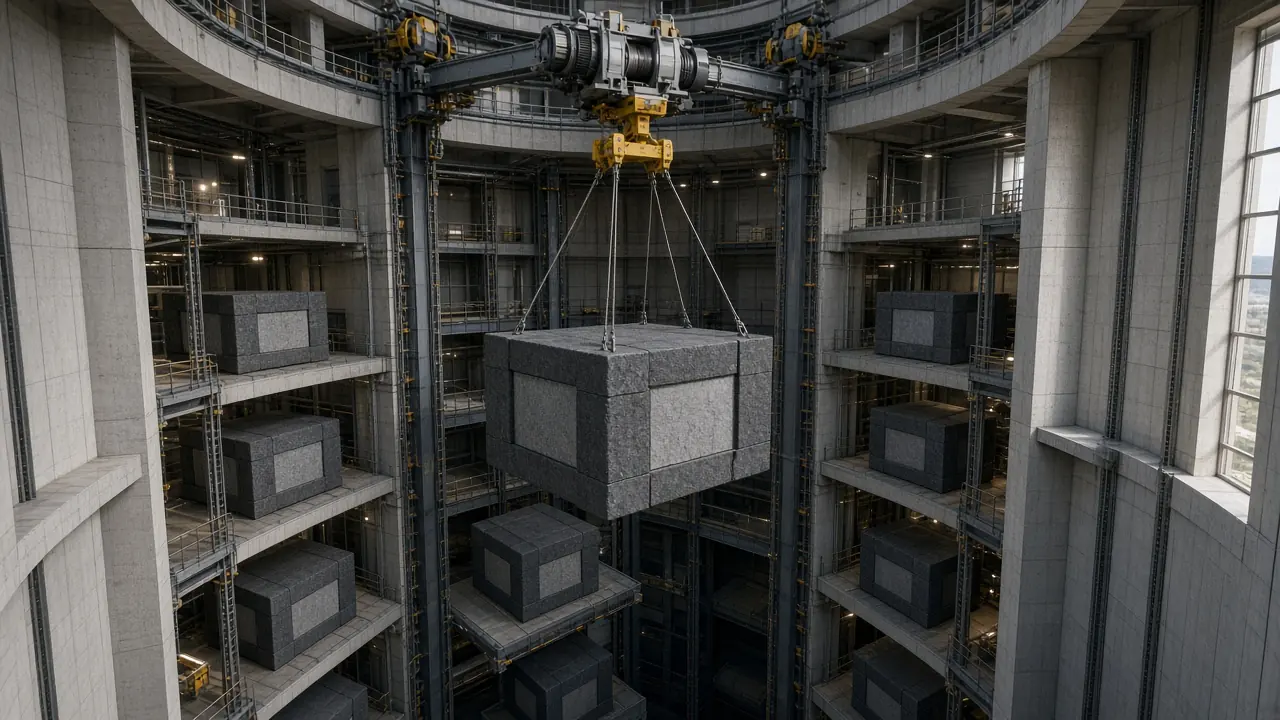
Skyscrapers that work as gravity batteries
Energy Vault and SOM propose storing energy by raising and lowering weights inside towers.

Scientists create a supersolid of light and matter at room temperature
A quantum state that flows like a liquid and orders itself like a crystal, with no need for extreme cold.
Hubble finds that oxygen is missing from dwarf galaxies
Supernova explosions expel more oxygen from small galaxies than models predicted.