Hubble finds that oxygen is missing from dwarf galaxies
Supernova explosions expel more oxygen from small galaxies than models predicted.
Stars make oxygen, but in nearby dwarf galaxies much of that oxygen is missing. Hubble helped find out why.
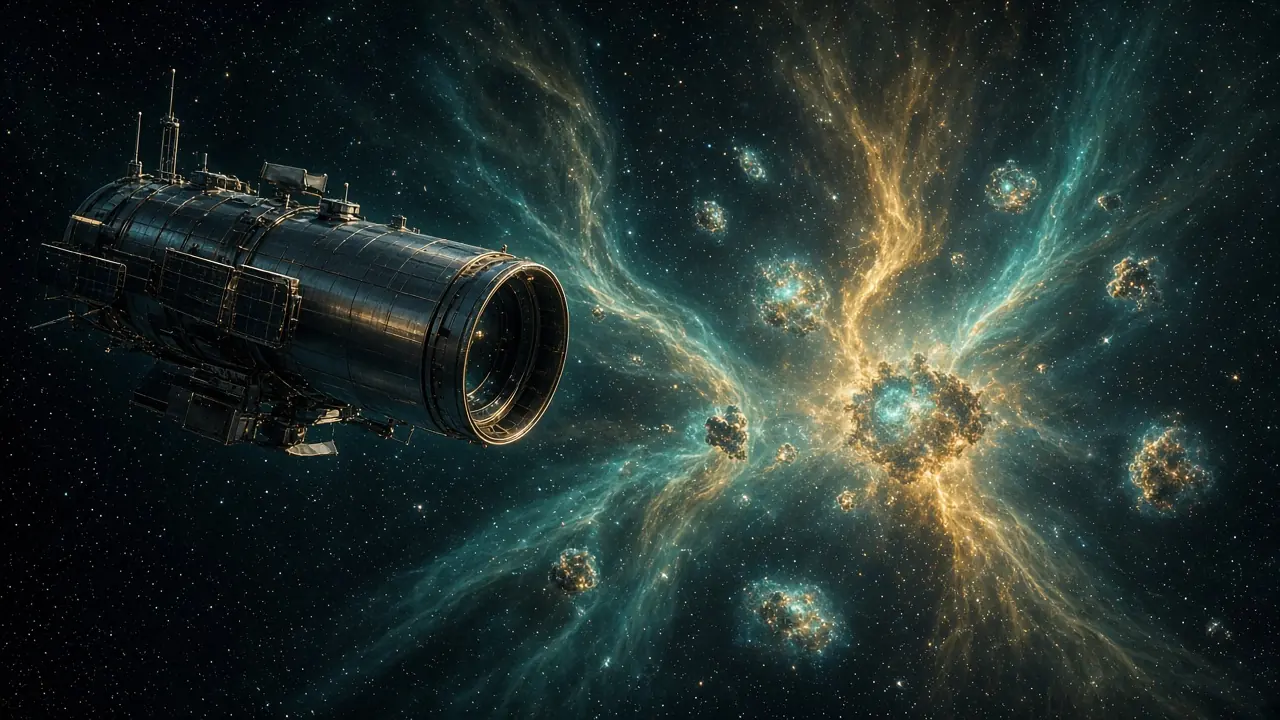
A study published Monday in The Astrophysical Journal analyzed 37 nearby dwarf galaxies, with between a few thousand and hundreds of millions of stars, and found far less oxygen than simulations predict.
The GLOW project, funded by NASA and the U.S. National Science Foundation, used archival Hubble images to reconstruct each galaxy's star-formation history, along with data from the Spitzer telescope and the VLA and ATCA radio telescopes. That way they traced oxygen in stars, gas and dust.
The conclusion is that supernova-driven galactic winds expel oxygen from small galaxies more effectively than models assumed, and that these galaxies keep only a small fraction of what they produce. This helps explain how galaxies evolve and how they enrich the space between them.
Key facts
- Galaxies studied: 37 nearby dwarfs.
- Oxygen is the most abundant element after hydrogen and helium.
- It is still unknown whether the lost oxygen is in the gas halo or left completely.
- Principal investigator: Kristen McQuinn (Rutgers and STScI).
The team will use the Roman telescope to look for even smaller galaxies, and then Hubble and Webb to study them in depth.
Futurismo newsletter
Get the most futuristic stories in your inbox. Free.
By subscribing you agree to receive emails from Futurismo and our privacy policy. Unsubscribe anytime.Related stories
A hidden star is plowing through Betelgeuse's atmosphere
Radio telescopes detect that a companion called Siwarha is distorting the red supergiant's atmosphere.
A theorem strengthens the case that the universe had a beginning
Raphael Bousso extends a singularity theorem into the quantum realm.
K2-18b: the signs of life that still don't convince
James Webb hinted at molecules linked to life, but later reanalyses don't confirm them.
Mars is not dead: a giant volcano is still exhaling gas
The Trace Gas Orbiter detects hydrogen chloride over Alba Mons, a sign of ongoing igneous processes.