Living microbes found inside a 2-billion-year-old rock
It is the oldest known rock hosting life, sealed in clay-filled cracks.
Inside a sealed crack in a 2-billion-year-old South African rock live colonies of microbes: the oldest example of its kind found so far.
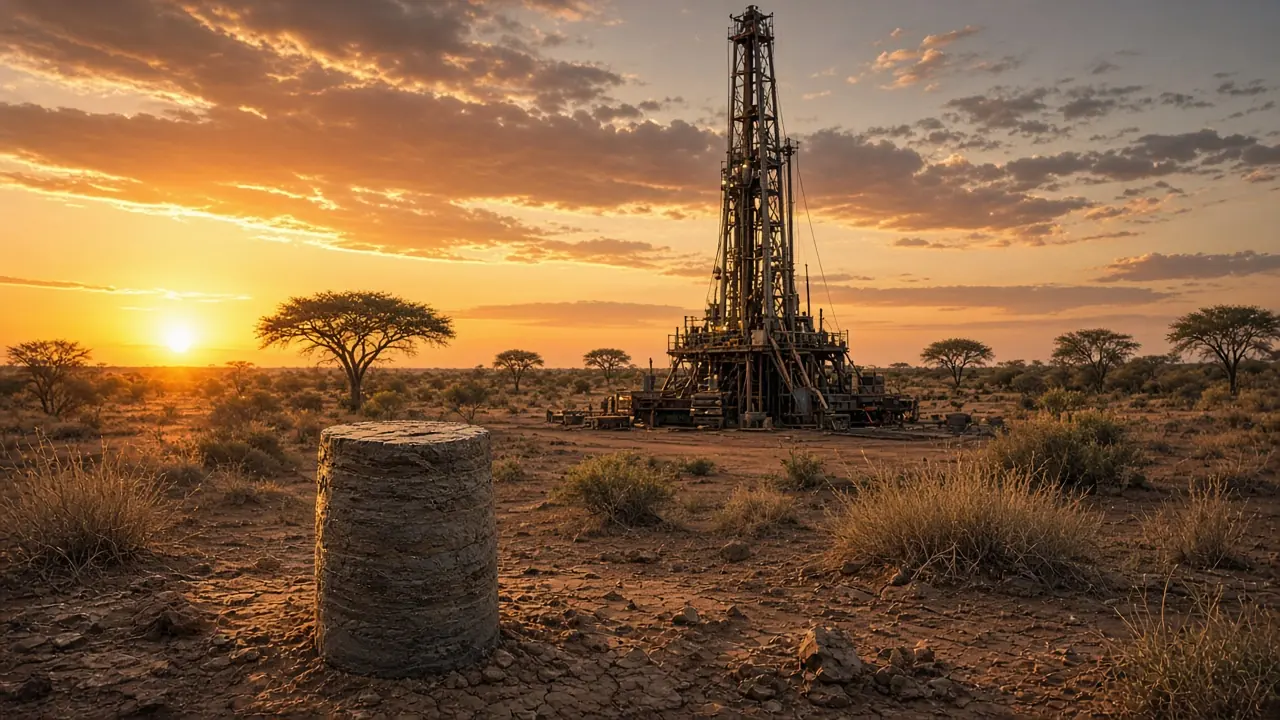
A team led by Yohey Suzuki, of the University of Tokyo, analyzed a 30-centimeter rock core drilled from about 15 meters deep in the Bushveld Igneous Complex, in South Africa. When they cut it into thin slices, they found living microbial cells packed into the cracks. Nearby gaps were plugged with clay, so nothing could get in or out.
To rule out contamination during drilling or analysis, they combined three imaging techniques: infrared spectroscopy, electron microscopy and fluorescence microscopy with DNA staining. This confirmed the microbes were native to the rock and alive.
Until now, the oldest geological layer with living microbes was a 100-million-year-old deposit beneath the seafloor. Note: the microbes are not 2 billion years old; they colonized the rock after it formed. Even so, studying their DNA could offer clues about the early evolution of life.
Key facts
- The rock formed about 2.05 billion years ago.
- The Bushveld complex covers about 66,000 km² and supplies nearly 70% of the platinum mined worldwide.
- The study was published in Microbial Ecology in October 2024.
- It was supported by the International Continental Scientific Drilling Program.
- The rock core was 85 millimeters in diameter.
Suzuki hopes to apply the method to rocks of similar age that the Perseverance rover could bring back from Mars.
Futurismo newsletter
Get the most futuristic stories in your inbox. Free.
By subscribing you agree to receive emails from Futurismo and our privacy policy. Unsubscribe anytime.Related stories
Traces of blood found in a 115-million-year-old dinosaur
A fossil from Brazil preserves structures that look like red blood cells with remnants of heme.
The five letters of the genetic code were on asteroid Ryugu
Samples brought back by Japan's Hayabusa2 mission contain all five bases of DNA and RNA.

Taurine, an unexpected brake on age-related inflammation
A Yale study in Cell reveals how this amino acid controls a key immune alarm.
The genome of the Greenland shark, the longest-lived vertebrate
Its DNA reveals clues about how it can live around four centuries.