Traces of blood found in a 115-million-year-old dinosaur
A fossil from Brazil preserves structures that look like red blood cells with remnants of heme.
A Cretaceous dinosaur may have left behind more than the shape of its bones. Inside its fossilized leg were structures that look like mineralized red blood cells.
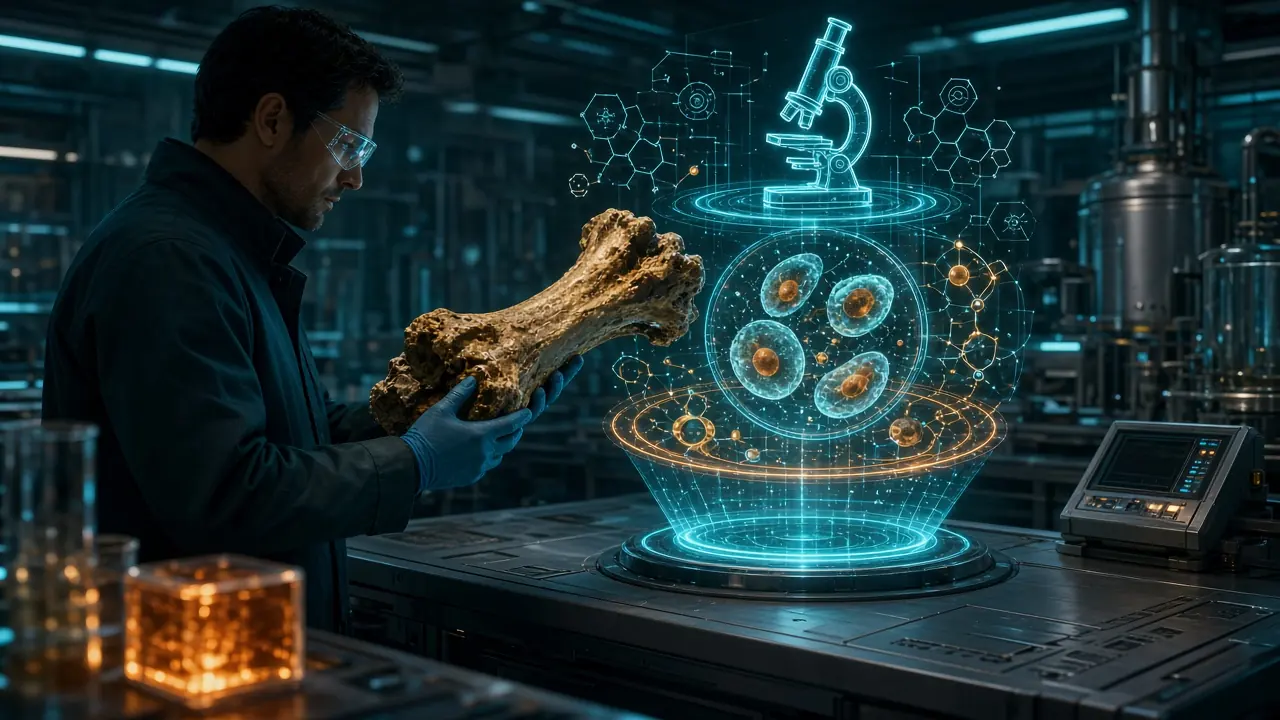
An international team led by geochemist Kliti Grice, of Curtin University, identified heme, the iron-bearing part that lets hemoglobin carry oxygen, in the leg of an Aratasaurus museunacionali. The roughly 3-meter animal lived 115 million years ago in what is now northeastern Brazil and died at about four years old.
Inside the channels where blood vessels once ran were rounded bodies. To check that they were not minerals or microbes, the team combined microscopy with several chemical techniques: they found heme B and an altered version, plus porphyrins, iron, nitrogen and carbon associated with those shapes.
It would be one of the strongest cases of blood remnants in a dinosaur, because the microbial mud surrounding the bone held other pigments, more linked to photosynthesis. Even so, the authors acknowledge they cannot fully rule out heme-producing microbes, and they did not find the protein part of hemoglobin.
Key facts
- Age of the fossil: 115 million years (Romualdo Formation, Brazil).
- The altered form of heme was about 90 times more abundant.
- A mineral, hausmannite, may have protected the material.
- Published in Proceedings of the National Academy of Sciences.
Turning these remnants into a picture of dinosaur metabolism will take more work. It is not Jurassic Park, but it gets a little closer.
Futurismo newsletter
Get the most futuristic stories in your inbox. Free.
By subscribing you agree to receive emails from Futurismo and our privacy policy. Unsubscribe anytime.Related stories
Living microbes found inside a 2-billion-year-old rock
It is the oldest known rock hosting life, sealed in clay-filled cracks.
Shri rapax, the small dinosaur with robust thumbs
A new dromaeosaurid from Mongolia had especially strong hands.

The genome of the Greenland shark, the longest-lived vertebrate
Its DNA reveals clues about how it can live around four centuries.
"Apex," the stegosaurus sold for 44.6 million dollars
It is the most expensive dinosaur fossil ever auctioned; Ken Griffin bought it.