Artemis II returns to Earth after its trip around the Moon
The four astronauts splashed down off San Diego on April 10, 2026.
For the first time in more than half a century, humans traveled around the Moon and returned safely to Earth.
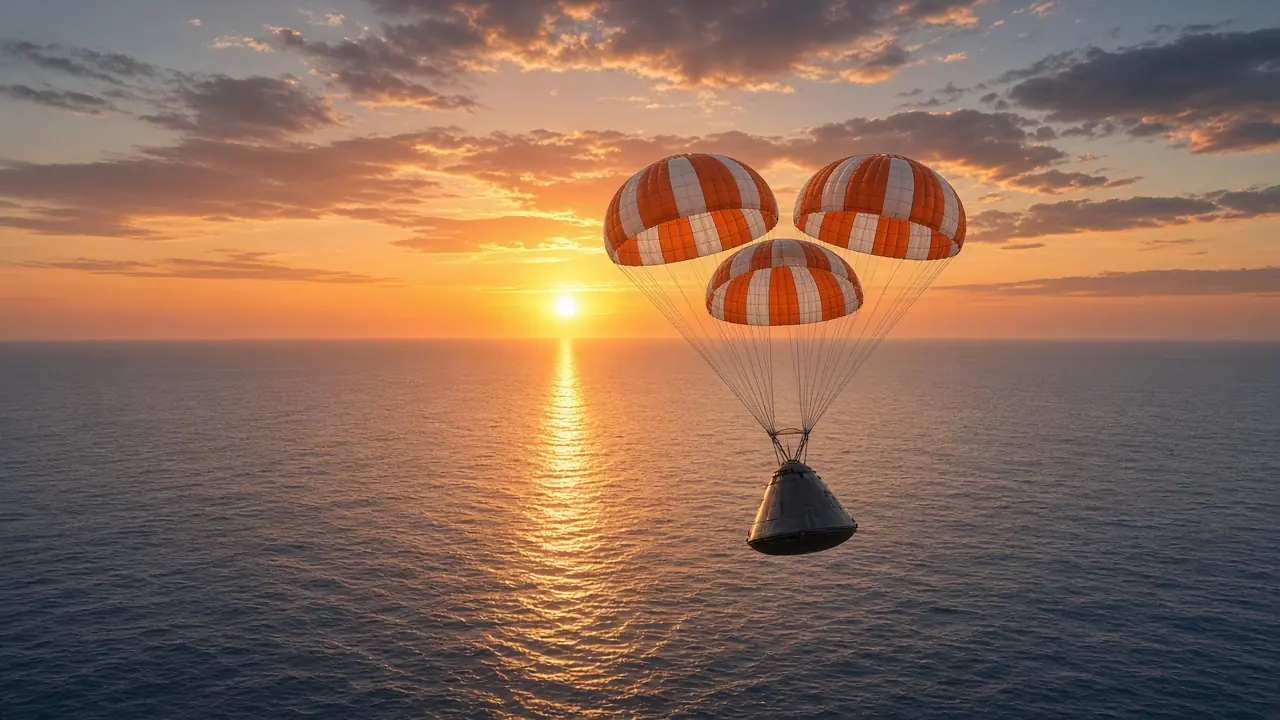
NASA's Artemis II mission ended with the Orion capsule splashing down in the Pacific Ocean off San Diego on April 10, 2026, after about 10 days of flight.
On board were NASA astronauts Reid Wiseman, Victor Glover and Christina Koch, and Canadian Jeremy Hansen, of the Canadian Space Agency. NASA welcomed them back as record-setting "moonfarers."
Artemis II was the first crewed flight of the Artemis program and served to test the Orion spacecraft and the SLS rocket with people on board. Its success is a necessary step before attempting to walk on the lunar surface again.
Splashdown was at 5:07 p.m. Pacific time. The Orion capsule, named Integrity, reached 252,756 miles (about 406,770 kilometers) from Earth, the farthest distance reached by humans, beating the Apollo 13 record. Hansen also became the first non-American astronaut to travel around the Moon.
Key facts
- Splashdown: April 10, 2026, off San Diego.
- Crew: Wiseman, Glover, Koch and Hansen.
- Approximate duration: 10 days.
- First crewed flight of the Artemis program.
- Distance record: 252,756 miles (about 406,770 km) from Earth.
NASA is preparing the next Artemis missions, which aim to return astronauts to the lunar surface.
Futurismo newsletter
Get the most futuristic stories in your inbox. Free.
By subscribing you agree to receive emails from Futurismo and our privacy policy. Unsubscribe anytime.Related stories
Polaris Dawn: the first commercial spacewalk
Jared Isaacman and Sarah Gillis stepped out into the vacuum in September 2024.
Martian dust is gentler than lunar dust, but it has risks
Spacesuit samples aboard Perseverance barely wore down over 1,645 Martian days.
The Swift telescope will fall to Earth after a failed rescue
After almost 22 years hunting cosmic explosions, the NASA observatory is reentering the atmosphere uncontrolled.

The five letters of the genetic code were on asteroid Ryugu
Samples brought back by Japan's Hayabusa2 mission contain all five bases of DNA and RNA.