The Swift telescope will fall to Earth after a failed rescue
After almost 22 years hunting cosmic explosions, the NASA observatory is reentering the atmosphere uncontrolled.
The Swift space telescope is about to be swallowed by the atmosphere. With it goes a unique tool for detecting the most violent explosions in the universe.
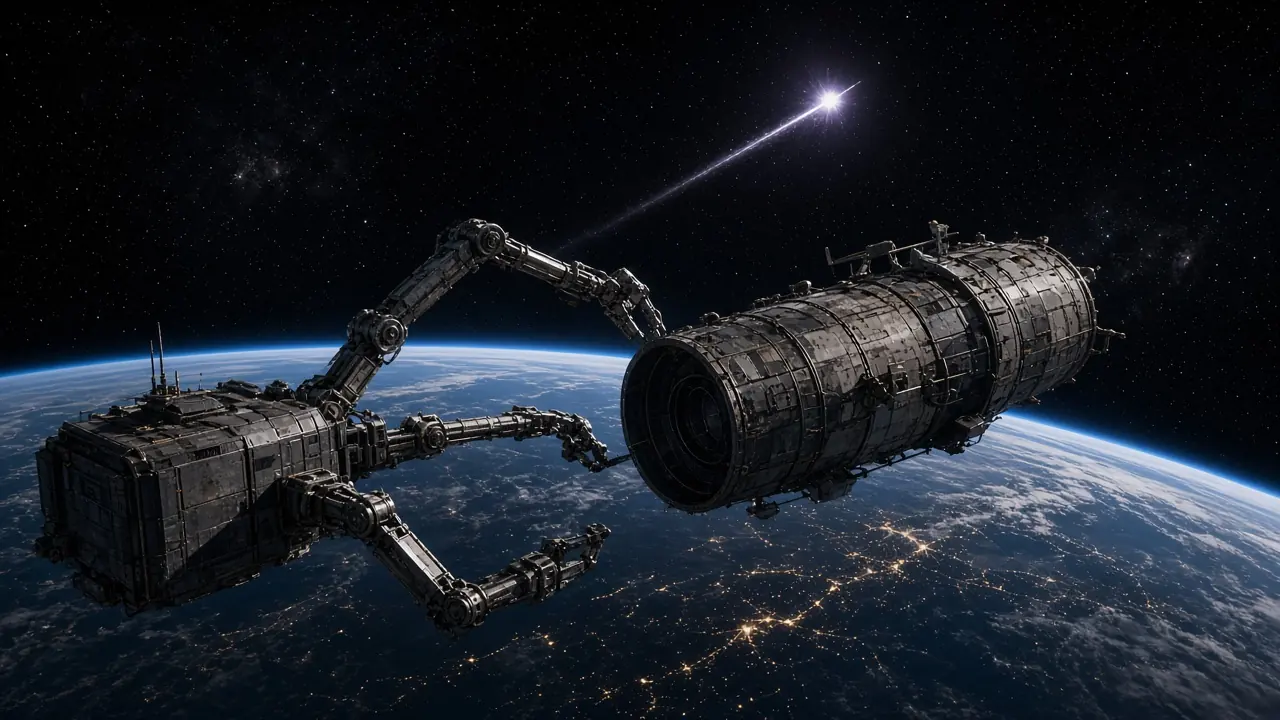
After almost 22 years of service, the NASA observatory will fall uncontrolled between the night of Tuesday, November 3, and Wednesday, November 4. On October 20 it had dropped to about 275 kilometers in altitude, entered survival mode and was ordered to end its mission from Pennsylvania State University.
NASA tried something unprecedented: in September 2025 it hired the company Katalyst Space for 30 million dollars, which built the LINK robot in nine months. It was meant to grab Swift with three robotic arms and lift it from about 360 to 600 kilometers. LINK launched on July 3, but an attitude control problem prevented the capture, and on August 19 the rescue was declared lost.
Solar activity increased drag in the upper atmosphere and sped up its fall; a geomagnetic storm on October 31 brought it forward even more. Its orbit covers a band between about 21 degrees north and south latitude, mostly ocean but also parts of Africa, Asia and Latin America. Most of it will burn up, and only a few small, charred fragments are expected to reach the ground.
Key facts
- Weight: about 1.5 tonnes, five times more than a first-generation Starlink.
- It was designed for a two-year mission and worked for almost 22.
- Estimated reentry: November 4 at 05:31 UTC, with a 12-hour margin.
- The LINK rescue robot cost 30 million dollars.
NASA will use LINK's maneuvers to test technologies for future robotic satellite-servicing missions.
Futurismo newsletter
Get the most futuristic stories in your inbox. Free.
By subscribing you agree to receive emails from Futurismo and our privacy policy. Unsubscribe anytime.Related stories
The continents are drying at an alarming rate
A satellite-data study shows Earth has been losing freshwater since 2002.
A hidden star is plowing through Betelgeuse's atmosphere
Radio telescopes detect that a companion called Siwarha is distorting the red supergiant's atmosphere.
Hubble finds that oxygen is missing from dwarf galaxies
Supernova explosions expel more oxygen from small galaxies than models predicted.

The battery that stores energy with CO2 instead of lithium
An Italian company stores solar electricity by compressing carbon dioxide.