Jumping spiders may dream like we do
A study finds in these spiders a sleep phase similar to REM, the stage of vivid dreams.
It hangs upside down under its silk shelter, moves its retinas and curls its legs while it sleeps. A spider might be dreaming.
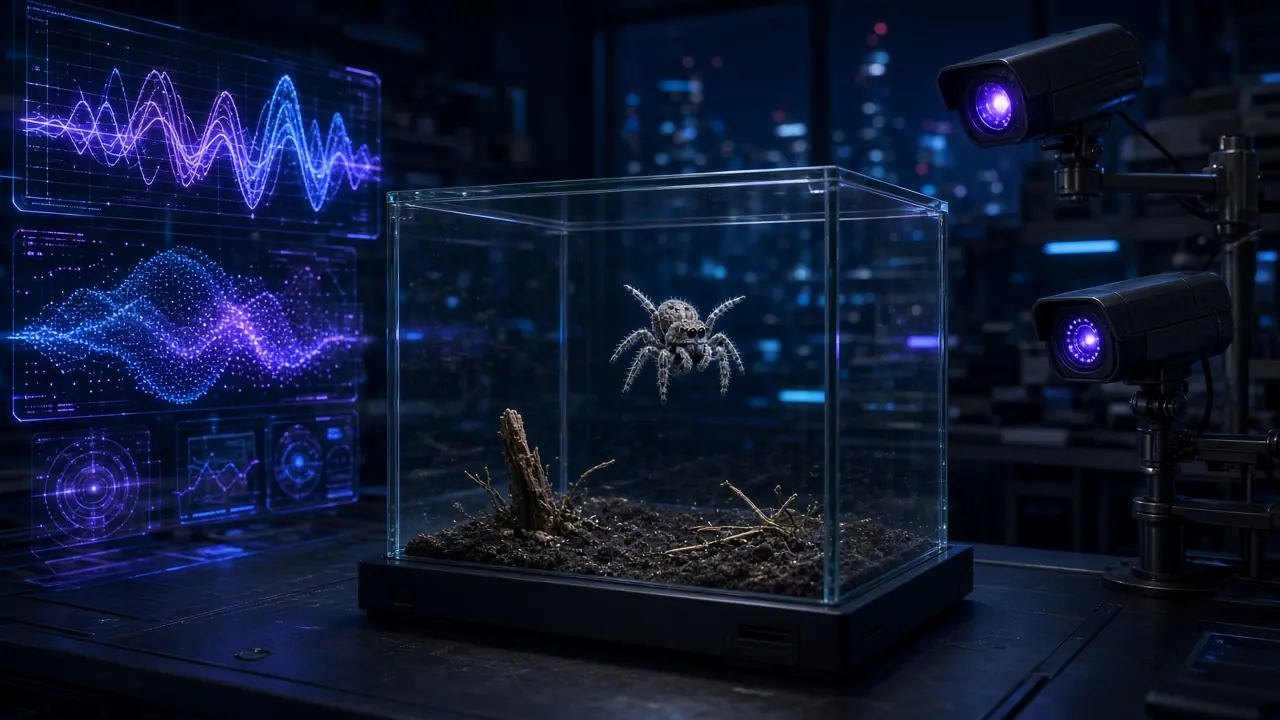
Biologists Nadja Geiger and Daniela Rößler, of the University of Bonn, found evidence that the jumping spider Portia fimbriata, from tropical northeastern Australia, has two distinct sleep states, one of them similar to the REM sleep associated with our vivid dreams.
The team combined video recordings with responsiveness tests. During the REM-like episodes, about 83 seconds on average, the spiders were slower to react to a sound: four out of ten did not respond within ten seconds, although when awake they reacted instantly. After a night interrupted by flies, their REM-like sleep time rose from about nine to seventeen minutes.
That recovery suggests a regulated biological need and supports the idea that dreaming may have evolutionary roots far older than vertebrates. But the study measured behavior, not brain activity, so it does not prove that spiders dream as we do.
Key facts
- Species: Portia fimbriata, a very intelligent spider that hunts other spiders.
- Average length of each REM-like episode: about 83 seconds.
- Octopuses and some jellyfish also show sleep-like states.
- Published in Proceedings of the National Academy of Sciences.
Comparing such distant animals will help reveal whether dreaming is a very ancient inheritance or something that arose several times.
Futurismo newsletter
Get the most futuristic stories in your inbox. Free.
By subscribing you agree to receive emails from Futurismo and our privacy policy. Unsubscribe anytime.Related stories

Traces of blood found in a 115-million-year-old dinosaur
A fossil from Brazil preserves structures that look like red blood cells with remnants of heme.

The genome of the Greenland shark, the longest-lived vertebrate
Its DNA reveals clues about how it can live around four centuries.
Shri rapax, the small dinosaur with robust thumbs
A new dromaeosaurid from Mongolia had especially strong hands.

Homo erectus fossils recovered from the seafloor in Indonesia
Remains dredged from the Madura Strait reveal a land now underwater.