"First and second sleep": how people slept before electric light
A historian proposed that sleeping in two stretches was common; today the idea is debated.
Waking up at midnight was not always seen as a problem. According to one historian, sleeping in two parts used to be normal.
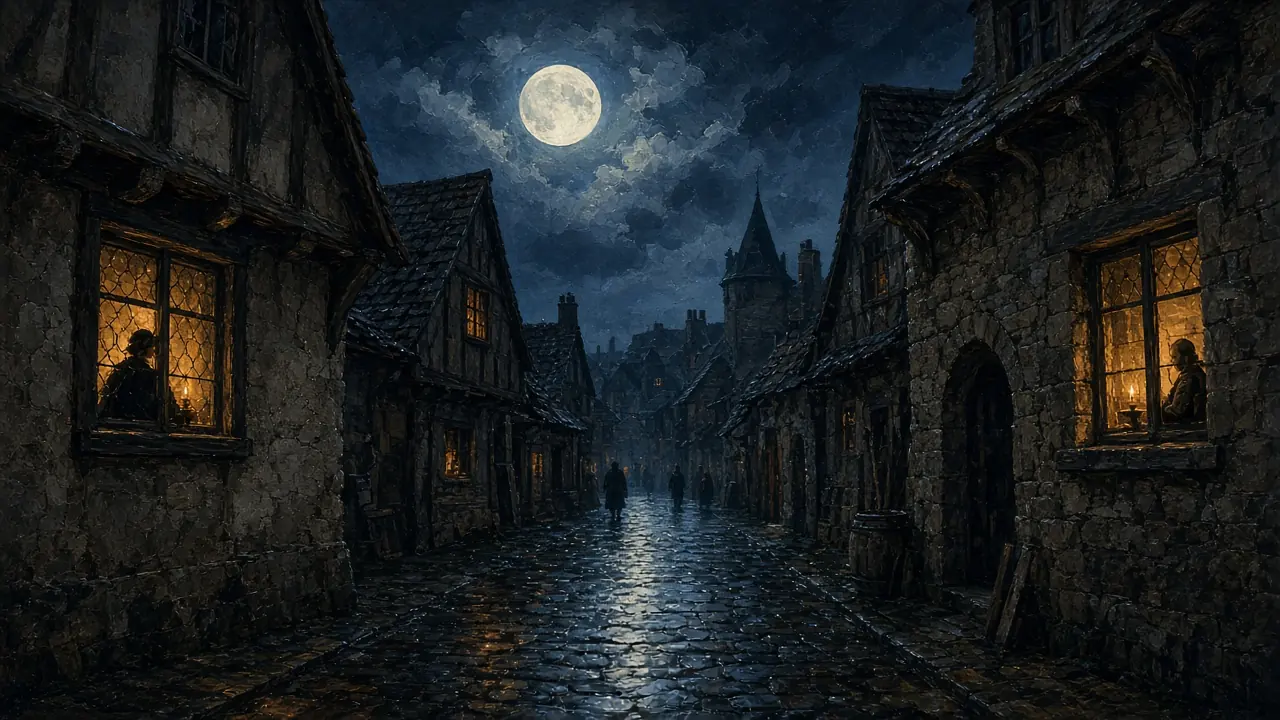
In 2001, historian Roger Ekirch published a study in The American Historical Review based on diaries, court records, manuals and literature from preindustrial Europe. He found numerous references to a "first sleep" and a "second sleep."
In his interpretation, people went to bed shortly after nightfall, slept a few hours, woke around midnight for a while and then slept again until dawn. In that interval they prayed, talked, reflected or did chores. Ekirch proposed that artificial lighting eventually consolidated sleep into a single block.
The idea became very popular, but it has nuances. In 2015, a team led by Jerome Siegel (UCLA) measured sleep in three societies without electricity—the Hadza of Tanzania, the San of Namibia and the Tsimane of Bolivia—and reported in Current Biology that they slept in a single block, without long midnight awakenings. Ekirch replied that there is abundant historical and ethnographic testimony of "first and second sleep" outside Europe, including in equatorial regions.
The 2015 study also found these three societies did not sleep more than industrial ones: between 5.7 and 7.1 hours of sleep, going to bed on average 3.3 hours after sunset and barely napping. So current evidence does not allow us to say two-stretch sleep was universal, nor that it never existed.
Key facts
- Roger Ekirch's study in The American Historical Review, 2001.
- Based on historical sources from preindustrial Europe.
- Proposes that artificial light consolidated sleep into one block.
- A 2015 study of the Hadza, San and Tsimane found no two-stretch sleep; the debate continues.
The debate between historians and sleep scientists remains open.
Futurismo newsletter
Get the most futuristic stories in your inbox. Free.
By subscribing you agree to receive emails from Futurismo and our privacy policy. Unsubscribe anytime.Related stories
The battery that stores energy with CO2 instead of lithium
An Italian company stores solar electricity by compressing carbon dioxide.
More CO2 makes trees grow faster
A study of US forests links rising CO2 to greater wood volume.
An AI-agent lab that runs DNA experiments on its own
AutoDNA, in Shanghai, designs and executes molecular experiments with minimal human intervention.
Europa's oceans could host long-lived hydrothermal vents
A model shows seafloor heat could last billions of years.