NASA trains autonomous landings for the Moon and Mars
The SPLICE system, aboard an Alta-X drone, maps terrain and diverts descent if rocks or slopes look unsafe.
On the Moon or Mars there is no time to ask Earth what to do about a last-minute crater. The craft has to decide alone.
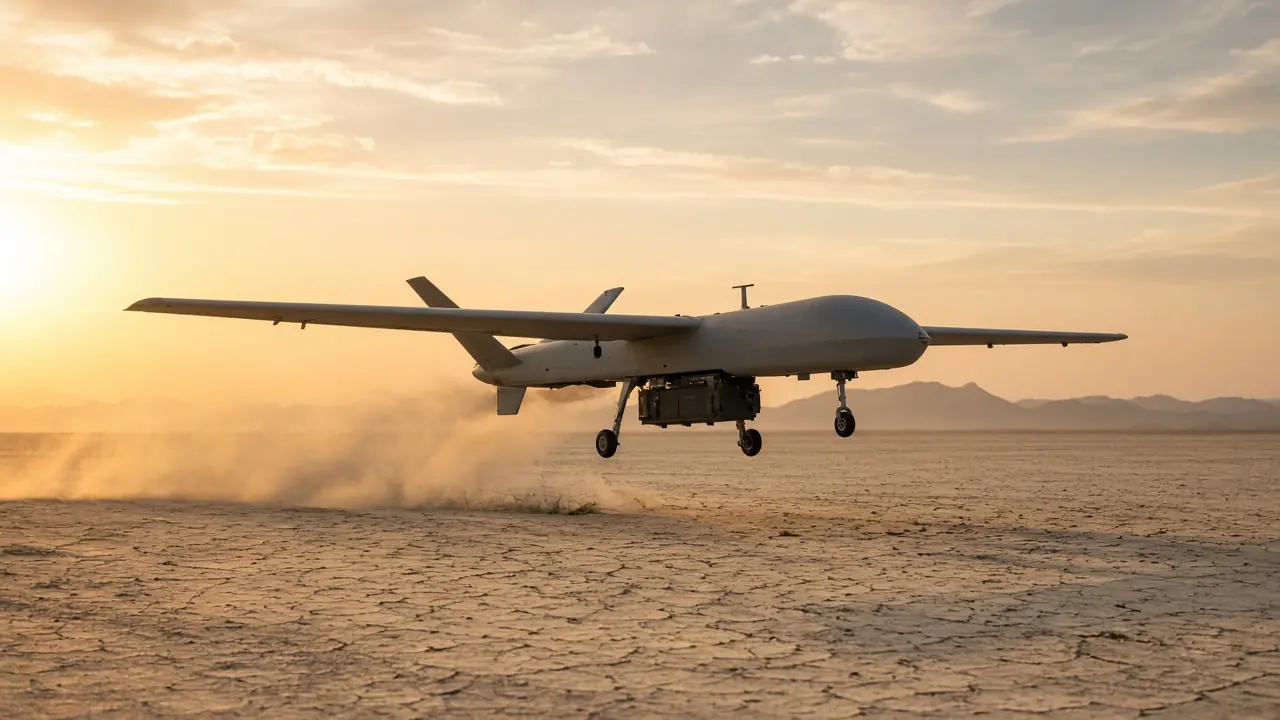
NASA reported on November 4, 2026 that the SPLICE (Safe and Precise Landing – Integrated Capabilities Evolution) package, developed at Johnson Space Center, completed simulated lunar descent maneuvers on August 27 aboard an Alta-X drone at Rogers Dry Lake near Armstrong Flight Research Center in Edwards, California.
In flight, SPLICE builds high-resolution digital elevation maps from lidar sensors, judges whether the planned site is safe and, if it finds danger, diverts the vehicle to a better spot. Earlier June and July tests validated communications, telemetry and hover control. Project manager Davis Adams said the flight crowns almost a decade of work and raises technology readiness for robotic and crewed lunar flights.
The agency is already talking with commercial lunar lander providers about integrating SPLICE versions. It plans to publish the guidance software in the NASA catalog this Northern Hemisphere fall, also useful for autonomous surface mobility. Flight Opportunities precedents include 2019 trajectories and 2020 precision-landing sensors.
Key facts
- Key flight: August 27, 2026, Rogers Dry Lake (Armstrong).
- Test platform: Alta-X drone with Johnson’s SPLICE payload.
- Lidar elevation maps and autonomous divert from hazards.
- Guidance software planned for the NASA catalog this fall.
Every desert rehearsal brings closer the day a craft picks the safe clearing among lunar or Martian rocks on its own.
Futurismo newsletter
Get the most futuristic stories in your inbox. Free.
By subscribing you agree to receive emails from Futurismo and our privacy policy. Unsubscribe anytime.Related stories
The Swift telescope will fall to Earth after a failed rescue
After almost 22 years hunting cosmic explosions, the NASA observatory is reentering the atmosphere uncontrolled.

A hidden star is plowing through Betelgeuse's atmosphere
Radio telescopes detect that a companion called Siwarha is distorting the red supergiant's atmosphere.
The coldest temperature ever measured is born in orbit
On Tiangong station, rubidium atoms reached 9.7 picokelvin, four times colder than the previous record.
A theorem strengthens the case that the universe had a beginning
Raphael Bousso extends a singularity theorem into the quantum realm.